
February 18, 2026
By Hr Natura
Can Vibration Plates Enhance Core Stability and Balance? A Research-Based Analysis of Vibration Plate Benefits and Whole Body Vibration Training
Person standing on a vibration plate demonstrating balance and core activation.
1. Context and Observational Background
Over the past 12 years working in clinical nutrition and metabolic research, I have observed that individuals navigating a weight loss plateau often shift their focus toward alternative training modalities. Among the most frequently discussed in recent years are vibration plate benefits and structured whole body vibration training.
In longitudinal tracking within structured programs at Bionatry, I have documented not only metabolic adaptation during caloric restriction but also neuromuscular changes related to balance, posture, and spontaneous movement patterns.
One behavioral variable that consistently appeared relevant in observational logs was brief low-intensity morning movement within 20–30 minutes of waking. This was not introduced as therapy, but recorded as a behavioral marker.
Participants who incorporated 5–10 minutes of light dynamic movement early in the day often demonstrated:
- More stable daily NEAT levels
- Less perceived postural fatigue
- Improved balance confidence scores
These observations were not derived from randomized controlled trials and therefore cannot establish causation. Confounding variables such as baseline fitness, sleep timing, and caloric intake were present.
However, mechanistic plausibility exists. Circadian alignment influences metabolic efficiency and neuromuscular readiness (Scheer et al., Proceedings of the National Academy of Sciences, 2009). Morning movement may reinforce circadian signaling and motor activation patterns.
Interest in vibration plate benefits has increased partly because oscillatory stimulation provides a low-impact stimulus that may interact with neuromuscular control systems involved in balance and core stability.
2. Mechanisms and Rationale Behind the Morning Variable
Circadian Biology and Motor Readiness
Circadian rhythms regulate hormonal secretion, including cortisol. The cortisol awakening response influences alertness and substrate mobilization.
Scheer et al. (2009) demonstrated that circadian misalignment alters glucose metabolism and energy expenditure independent of sleep duration. Proper alignment may influence neuromuscular coordination indirectly through metabolic regulation.
Morning low-intensity movement may amplify this alignment signal.
Leptin, Ghrelin, and Appetite Feedback
Energy restriction reduces leptin and elevates ghrelin, affecting appetite feedback. During a weight loss plateau, these hormonal shifts often coincide with reduced spontaneous movement.
Rosenbaum & Leibel (International Journal of Obesity, 2010) described adaptive thermogenesis, where resting energy expenditure declines beyond predicted levels.
This reduction is often accompanied by suppressed NEAT.
Metabolic Adaptation and Energy Expenditure
Müller et al. (Obesity Reviews, 2015) expanded on metabolic adaptation during prolonged caloric deficit. Declines in total daily energy expenditure may occur due to:
- Lower resting metabolic rate
- Reduced movement economy
- Decreased subconscious motor output
Whole body vibration training has been studied for its capacity to increase electromyographic activity in trunk and lower limb musculature (Cardinale & Wakeling, Journal of Applied Physiology, 2005).
Evidence suggests oscillatory stimuli may enhance reflexive muscle contractions through tonic vibration reflex mechanisms. This may influence postural control systems, although long-term metabolic outcomes remain inconsistent across trials.
When individuals compare:
- vibration plate benefits
- vibration plate balance exercises
- vibration plate workout stability
- vibrating fitness plate exercises
The central question becomes whether oscillatory input meaningfully affects core stabilization pathways or simply increases acute muscle activation.
Current literature supports short-term neuromuscular activation but does not establish guaranteed structural adaptation.
3. Practical Implementation Framework
The following represents a methodological structure observed in applied settings. It is not a standalone obesity treatment.
Phase 1: Brief Low-Intensity Morning Movement
- Timing: Within 30 minutes of waking
- Duration: 5–10 minutes
- Intensity: Light dynamic mobility (hip hinges, shoulder rolls, slow marching)
- Objective: Reinforce circadian alignment and motor activation
Phase 2: Oscillatory Neuromuscular Exposure
For individuals exploring whole body vibration training:
- Frequency: 2–4 sessions per week
- Duration: 10–15 minutes
- Posture: Slight knee flexion, neutral spine
- Optional variations: Static squat hold, single-leg balance
Comparatively, when evaluating:
- vibration plate benefits vs traditional balance drills
- vibration plate workout stability vs bodyweight core training
The oscillatory platform introduces unpredictable micro-perturbations that may challenge proprioceptive pathways.
However, it does not replace structured resistance training.
Within program tracking at Bionatry, individuals using vibration exposure as an adjunct demonstrated modest improvements in balance tests. These data remain observational and limited by sample size.
4. Applicability, Boundaries, and Ethical Considerations
Likely Applicability
Potential relevance may exist for:
- Adults experiencing metabolic adaptation
- Individuals with reduced NEAT during dieting
- Those seeking low-impact neuromuscular activation
Contraindications
Whole body vibration platforms may not be appropriate for:
- Pregnancy
- Severe osteoporosis
- Acute musculoskeletal injury
- Implanted medical devices
Medical evaluation may be appropriate before initiating novel modalities.
Ethical Considerations
Body weight regulation is multifactorial. Genetics, environment, psychological stress, sleep patterns, and socioeconomic factors contribute to outcomes.
A weight loss plateau reflects physiological energy conservation mechanisms rather than personal failure.
This article is provided for educational purposes only and does not constitute medical advice.
Near the conclusion of structured programs discussed at Bionatry, I emphasize that oscillatory training should be integrated cautiously and contextually.
Transparency & Affiliate Disclosure
As part of discussing practical equipment used in whole body vibration training, one commercially available example is:
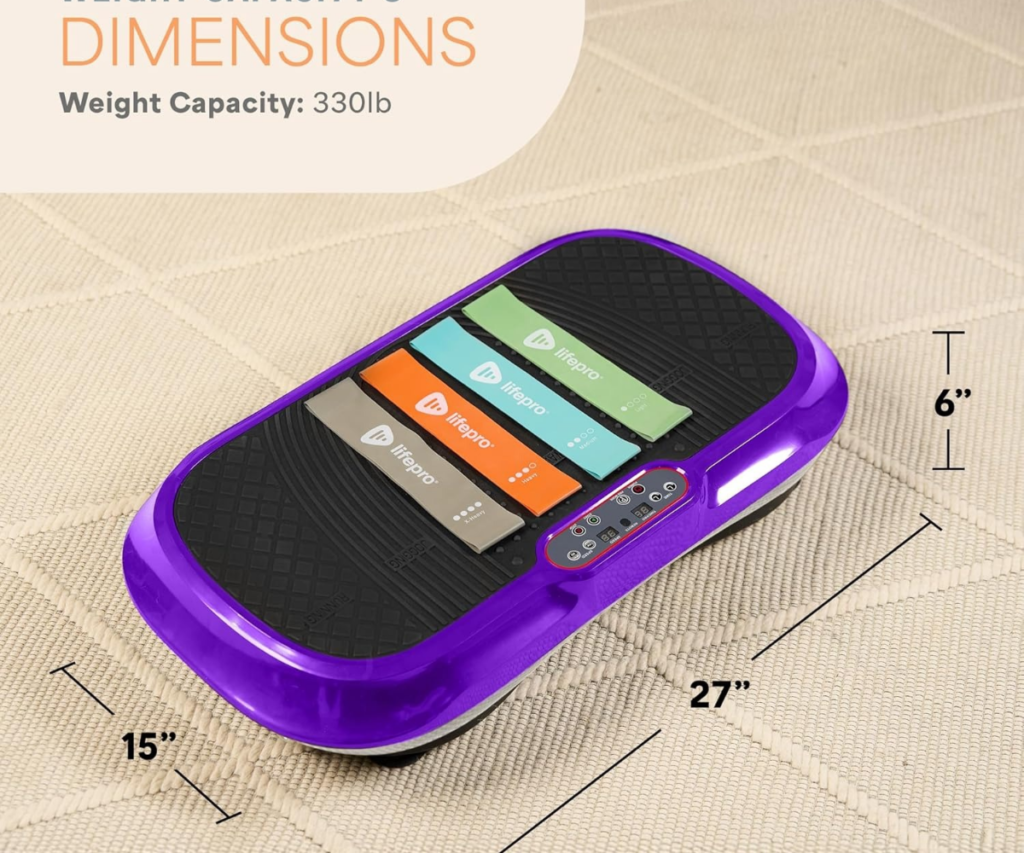
Lifepro Waver Vibration Plate Exercise Machine for Muscle Activation and Balance Work
https://amzn.to/4anYGSc
(As an Amazon Associate, we earn from qualifying purchases.)
Frequently Asked Questions
Do vibration plate benefits include improved core stability?
Evidence suggests short-term increases in muscle activation may occur. Long-term structural adaptation remains less clearly established in current literature.
Is whole body vibration training effective for breaking a weight loss plateau?
No conclusive evidence supports reversal of adaptive thermogenesis. It may contribute modestly to energy expenditure and neuromuscular engagement.
How does metabolic adaptation affect balance or posture?
Metabolic adaptation is primarily related to energy conservation. Indirectly, reduced spontaneous movement (NEAT suppression) may influence motor control patterns.
Are vibration plate balance exercises superior to traditional balance drills?
Current evidence does not establish superiority. Oscillatory input provides a different neuromuscular stimulus rather than a replacement.
Author Bio
Hr Natura is a health and nutrition researcher with over 12 years of experience analyzing dietary supplements and sharing practical, evidence-based strategies for weight management. He founded Bionatry to provide clear, science-backed resources for nutrition and weight management enthusiasts. Learn more at https://bionatry.com.