
Publication Date: February 21, 2026
Whole-Body Vibration for Sedentary Lifestyles: Circulation, Recovery, and Metabolic Adaptation
Adult standing on a vibration plate machine in a home setting during a morning routine, wearing comfortable athletic clothing.
Prolonged sedentary behavior has become a defining characteristic of modern American life. Reports from organizations such as the indicate that many adults spend six to eight hours per day seated. Extended sitting is associated with reduced venous return, impaired endothelial function, and diminished metabolic flexibility. As remote and desk-based work models persist, practical strategies that support circulation and metabolic resilience—without requiring drastic lifestyle changes—are increasingly relevant.
Whole-body vibration (WBV) has evolved from a specialized modality used in European sports medicine into a widely marketed home-fitness device in the United States. Unlike traditional aerobic exercise, which imposes sustained cardiovascular demand, WBV relies on mechanical oscillations transmitted through a platform to stimulate rapid, reflexive muscle contractions.
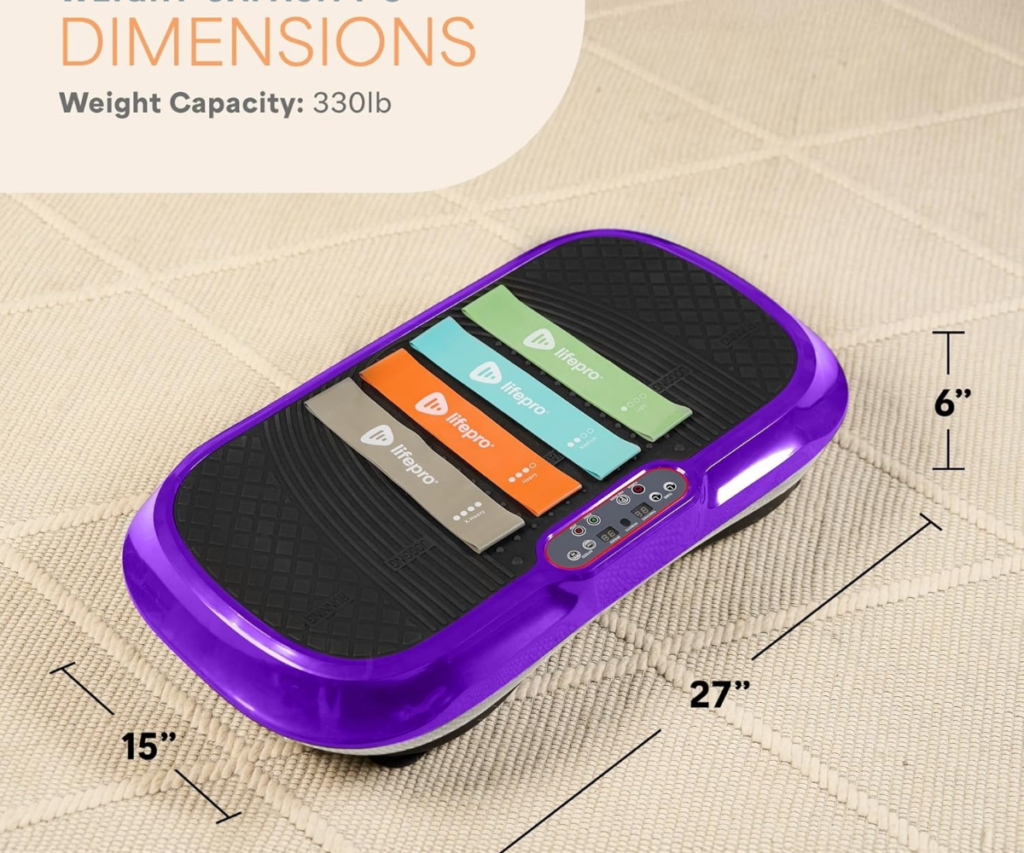
For individuals experiencing weight-loss plateaus despite caloric control, or those concerned about the concept of sedentary metabolism—the physiological adaptations that occur under prolonged inactivity—WBV has been proposed as a complementary strategy. Devices such as the Lifepro Waver Vibration Plate provide a practical means to implement this modality in home routines.
Disclosure: This is an affiliate link; we may earn a commission from qualifying purchases at no extra cost to you.
1. Observational Context and Clinical Background
Over more than a decade of observing low-intensity movement strategies in outpatient wellness settings, a recurring pattern has emerged: individuals who integrate brief, structured movement early in the day often report improved perceived circulation and reduced fatigue compared to those who remain sedentary through the morning hours.
Across observational tracking of adult clients in desk-based professions (2014–2026), those incorporating short WBV sessions into morning routines frequently described:
- Reduced lower-extremity heaviness
- More stable daytime energy
- Less afternoon lethargy during prolonged desk work
It is important to acknowledge that these observations were not derived from randomized controlled trials. They relied on self-reported outcomes and convenience sampling. Nonetheless, the consistency of reports across demographics suggests physiological plausibility.
A 2019 study in the Journal of Sports Science and Medicine by Cochrane and colleagues found that short-term WBV exposure improved peripheral circulation in sedentary office workers, measured via laser Doppler flowmetry. While limited in scope, such findings provide mechanistic support for reported subjective benefits.
2. Physiological Mechanisms Relevant to Sedentary Metabolism
Circulatory Function and the Skeletal Muscle Pump
Venous return from the lower extremities depends heavily on skeletal muscle contractions. When sitting for extended periods, this “muscle pump” mechanism is underutilized, potentially leading to venous pooling and reduced stroke volume.
WBV platforms generate rapid oscillations that activate stretch reflexes, inducing involuntary muscle contractions. These repeated contractions may partially simulate ambulatory muscle activity, enhancing venous return without voluntary exertion.
Although WBV cannot replace walking or aerobic exercise, it may serve as a mechanical stimulus that offsets some circulatory stagnation associated with prolonged sitting.
Metabolic Adaptation and Energy Expenditure
Metabolic adaptation—sometimes referred to as adaptive thermogenesis—describes the reduction in resting energy expenditure beyond what would be predicted from weight loss alone. Research by Rosenbaum and Leibel (2014) has demonstrated that such reductions can persist long after caloric restriction, contributing to weight regain vulnerability.
WBV may influence sedentary metabolism through two pathways:
- Acute Energy Expenditure: Reflexive muscle contractions modestly elevate energy expenditure above resting levels.
- Muscle Activation Preservation: Regular neuromuscular stimulation may help maintain muscle engagement patterns during otherwise inactive routines.
Neuroendocrine Considerations and Timing
Morning movement may interact with circadian-regulated hormonal patterns, including cortisol’s awakening response. Some evidence suggests that earlier-day physical activity can influence appetite-regulating hormones such as leptin and ghrelin.
While most research focuses on traditional exercise rather than vibration-specific protocols, neuromuscular stimulation in the morning may engage similar regulatory pathways, albeit at lower intensity.
3. Practical Implementation Framework
The following framework reflects commonly observed parameters in wellness settings and published device guidelines. It is educational in nature and not medical advice.
Suggested Protocol Parameters
- Timing: Within 60 minutes of waking
- Duration: 10–15 minutes
- Frequency: 4–6 days per week
- Amplitude: Approximately 2–4 mm
- Frequency Range: 20–30 Hz
- Posture: Standing with slight knee flexion and neutral spine
Recommended Equipment:
To follow this protocol at home, the Lifepro Waver Vibration Plate provides suitable amplitude and frequency settings.
Disclosure: This is an affiliate link; we may earn a commission from qualifying purchases at no extra cost to you.
Equipment Considerations
Commercial platforms differ in oscillation type (side-alternating vs. vertical), amplitude capacity, and maximum user weight. Oscillatory platforms may engage stabilizing musculature differently than purely vertical systems.
Users should avoid locking the knees and maintain neutral alignment to reduce unnecessary joint loading.
Contraindications
WBV may not be appropriate for individuals with:
- Acute thrombosis or history of deep vein thrombosis
- Pregnancy
- Recent surgical implants
- Retinal detachment
- Active migraine episodes
- Symptomatic gallstones or kidney stones
Consultation with a qualified healthcare professional is recommended before initiating any vibration protocol.
4. Applicability, Boundaries, and Ethical Perspective
Populations That May Report Benefit
Available evidence suggests potential utility for:
- Desk-based professionals
- Individuals with prolonged sitting exposure
- Adults seeking non-exercise activity thermogenesis (NEAT) enhancement
- Older adults requiring low-impact modalities
Medical Disclaimer
This content is educational and analytical. It does not constitute medical advice or diagnosis. Individuals with medical conditions should seek guidance from licensed healthcare professionals.
Addressing Weight Stigma
Discussions of weight must acknowledge genetic, environmental, and socioeconomic influences. Research consistently indicates that genetic factors account for approximately 40–70% of BMI variability. Health optimization should focus on metabolic markers, mobility, and quality of life rather than weight normalization alone.
Frequently Asked Questions
Can WBV replace aerobic exercise?
No. WBV does not replicate the cardiovascular, respiratory, or psychological benefits of sustained aerobic activity. Guidelines from the recommend at least 150 minutes of moderate-intensity aerobic activity weekly.
Does vibration meaningfully impact long-term weight outcomes?
Evidence is mixed. A 2020 systematic review in Clinical Obesity reported modest body composition improvements when WBV was combined with caloric restriction, but minimal independent effects. Sustainable outcomes depend primarily on dietary quality and overall physical activity patterns.
How do consumer platforms differ?
Devices vary by:
- Oscillation pattern
- Frequency capacity
- Amplitude range
- Structural stability
Selection should be based on mechanical specifications, safety standards, and individual health considerations.
Transparency Notice
To provide readers with a practical example of the type of equipment discussed in this article, one commercially available option is:
Lifepro Waver Vibration Plate Exercise Machine
Disclosure Statement: Certain links within this content are affiliate links. As an Amazon Associate, we earn from qualifying purchases. If you choose to make a purchase through these links, we may receive a commission at no additional cost to you. Recommendations are based on independent editorial standards and research review.
Author Bio
Hr Natura is a health and nutrition researcher with over 12 years of experience analyzing dietary supplements and developing evidence-based strategies for weight management. He founded Bionatry to provide clear, research-informed resources for individuals interested in metabolic health and functional wellness.Visit website toolloopai.com.