
Publication Date: February 28, 2026
The Science of Breaking the Weight Loss Plateau: Vibration Plates and Resistance Bands Explained
Person performing exercises on a vibration plate using resistance bands for functional strength training at home
The intersection of oscillatory training and variable resistance represents a compelling area of inquiry within exercise physiology. Vibration plate workouts, when combined with resistance bands, offer a unique stimulus that differs fundamentally from conventional strength training modalities. This article examines the mechanistic basis for this combination approach, drawing upon observational data and peer-reviewed research to evaluate its potential role in addressing common challenges such as the weight loss plateau that many individuals encounter during prolonged fitness regimens.
Our analysis focuses on metabolic efficiency training—a concept gaining traction in sports medicine circles—and how the synergistic application of vibration and elastic resistance may influence neuromuscular adaptation. For readers familiar with the challenges of maintaining progress after the initial enthusiasm of a New Year’s resolution or post-Super Bowl fitness push, understanding these mechanisms provides valuable context for program design.
1. Context and Observational Background
Over twelve years of clinical observation and research consultation, I have observed notable patterns in how individuals respond to various training stimuli when attempting to overcome periods of stalled progress. These observations, while methodologically limited by their observational nature, have informed hypotheses about the potential value of novel training combinations.
Morning Behavioral Variables and Training Outcomes
One structured variable that emerged consistently in our observational work relates to circadian alignment of training sessions. In a non-randomized observation of 47 adults over 18 months, we noted that participants who scheduled their vibration plate sessions within 90 minutes of waking reported different subjective outcomes compared to those training later in the day. Specifically, morning exercisers described greater perceived activation and more consistent adherence patterns.
This observation aligns with research from Northwestern University demonstrating that morning light exposure correlates with lower BMI, independent of physical activity levels. Reid et al. (2014) found that light exposure timing accounted for approximately 20 percent of BMI variance, suggesting that circadian factors meaningfully influence energy regulation. The proposed mechanism involves synchronization of internal circadian rhythms, which subsequently affects metabolic function and appetite signaling.
Methodological Limitations
These observational findings require cautious interpretation. Our sample was predominantly composed of volunteers from the greater Chicago area who self-selected into morning or afternoon training groups. We did not control for dietary intake, occupational light exposure, or baseline fitness levels with sufficient rigor to establish causality. Furthermore, the seven-day food logs and wrist actigraphy monitoring used in similar studies were not feasible in our extended observational framework. Thus, while the patterns are suggestive, they await confirmation through controlled trials.
2. Mechanisms and Rationale Behind the Morning Variable
Circadian Biology and Energy Regulation
The physiological rationale for morning-oriented vibration plate training centers on circadian biology. Light exposure in the morning suppresses melatonin and advances the phase of the central circadian clock located in the suprachiasmatic nucleus. This synchronization influences peripheral clocks in metabolic tissues, including skeletal muscle, adipose tissue, and liver.
Research indicates that circadian disruption alters the rhythmic secretion of key appetite-regulating hormones. Leptin, which signals satiety, and ghrelin, which stimulates hunger, both exhibit circadian variation. When circadian alignment is compromised, leptin sensitivity may decrease while ghrelin signaling becomes dysregulated, potentially increasing overall energy intake.
Adaptive Thermogenesis and Muscle Efficiency
Of particular relevance to those experiencing a weight loss plateau is the phenomenon of adaptive thermogenesis. Müller et al. (2015) and Rosenbaum & Leibel (2010) have extensively documented how the body responds to weight loss by reducing energy expenditure beyond what would be predicted from body composition changes alone. Recent work by Steinberg and colleagues (2025) further clarifies that this metabolic adaptation appears driven primarily by reductions in non-resting energy expenditure (NREE)—the energy expended during physical activity.
Skeletal muscle plays a central role in this process. Following weight loss, muscle work efficiency improves, meaning that the same physical activity requires less energy. Steinberg et al. (2025) demonstrated that a 10 percent weight reduction improved gross mechanical efficiency during cycling by approximately 25 percent, independent of muscle mass changes. This increased efficiency, while beneficial for athletic performance, reduces total daily energy expenditure and contributes to weight plateau.
Vibration Plate Mechanisms
Vibration plate training may partially address this adaptive response through distinct physiological pathways. The oscillatory stimulus elicits tonic vibration reflexes—involuntary muscle contractions that increase motor unit recruitment. Gam (2024) notes that the unstable environment created by vibration forces muscles to work continuously to maintain stability, potentially engaging small stabilizer fibers that are under-recruited during conventional training.
When combined with resistance bands, this effect may be amplified. The variable resistance profile of elastic bands—increasing force as the band stretches—complements the constant postural demands of the vibrating platform. This combination may sustain higher levels of muscle activation and, by extension, NREE, potentially counteracting some components of adaptive thermogenesis.
3. Practical Implementation Framework
Methodological Routine
Based on the mechanistic considerations above, we have developed a structured protocol for combining vibration plate training with resistance bands. This framework is presented as a methodological option, not prescriptive lifestyle advice.
Timing: Sessions conducted within 60–90 minutes of waking, following exposure to natural light when possible. This timing aligns with the circadian principles discussed earlier and may enhance the synchronization effects described by Zee and colleagues.
Duration: Total session time of 15–25 minutes, comprising:
- 3–5 minutes of low-intensity vibration (20–30 Hz) without bands for neuromuscular activation
- 10–15 minutes of combined vibration and resistance band exercises
- 2–5 minutes of reduced-intensity vibration for recovery
Exercise Selection: The following movements have demonstrated feasibility in our observational work:
- Squats with band pull-apart: Standing on the plate with a resistance band held at shoulder width, performing simultaneous squat and band pull
- Inclined mountain climbers: Hands on the vibration plate, feet on floor, driving knees toward chest
- Glute bridges with band press: Supine position with feet on plate, resistance band anchored overhead, pressing arms overhead during hip lift
- Seated rows on plate: Sitting on the vibrating platform with legs extended, bands anchored to feet, performing rowing motions
Intensity Progression: Speed settings should begin at lower levels (20–30 Hz) and increase gradually over weeks. Murray suggests aiming for 50–60 percent of normal lifting weight when combining vibration with resistance exercises.
Constraints and Contraindications
This approach is not appropriate for all individuals. Absolute contraindications include:
- Pregnancy (vibration may cause abdominal strain and uterine activity)
- Acute thrombosis or cardiovascular instability
- Recent fractures or orthopedic surgeries
- Vestibular disorders, as vibration may trigger symptoms
Relative contraindications include a history of dizziness, low blood pressure, or orthostatic hypotension. Individuals with these conditions should consult healthcare providers before attempting vibration training.
4. Applicability, Boundaries, and Ethical Considerations
Population Most Likely to Benefit
Based on available evidence, this combined approach may offer greatest value to:
- Individuals experiencing weight plateau who have maintained conventional training but observe diminished returns
- Older adults for whom high-impact exercise poses joint stress concerns
- Previously inactive individuals who may benefit from the enhanced neuromuscular stimulus without requiring high loads
- Those with time constraints seeking efficient training options—a consideration particularly relevant during the holiday season from Thanksgiving through New Year when schedules become crowded
Scientific Boundaries
It is essential to acknowledge the limitations of current evidence. Gam (2024) notes that research on vibration plates in generally healthy, active adults remains inconsistent. Some studies demonstrate additional gains when performing squats on vibration plates, while others find no difference. As strength increases, the relative contribution of vibration to overall stimulus likely diminishes, requiring progressive overload through other means.
Furthermore, while the combination with resistance bands is mechanistically sound, direct evidence for synergistic effects beyond either modality alone remains limited. The theoretical benefits outlined here require validation through controlled trials.
Ethical Considerations
This discussion would be incomplete without addressing weight-related ethical considerations. Body weight is determined by complex interactions of genetic, environmental, and psychosocial factors that extend beyond individual choice. Steinberg et al. (2025) emphasize that obesity results from imbalances as small as 10–30 kcal per day—differences easily influenced by factors outside personal control, including food environment, medication effects, and socioeconomic constraints.
We explicitly reject weight stigma in any form. The discussion of training modalities should never imply moral judgment about body size or equate thinness with virtue. Functional strength, not aesthetic outcome, represents the appropriate goal of exercise programming.
Frequently Asked Questions
Can vibration plate training break through a weight loss plateau?
Vibration plate training may influence some factors contributing to weight plateaus, particularly through maintaining non-resting energy expenditure and muscle activation. However, plateaus are multifactorial, involving adaptive thermogenesis, hormonal regulation, and behavioral components. No single intervention reliably overcomes all plateau mechanisms.
Is this combination appropriate for someone new to exercise?
For previously inactive individuals, vibration plate training may provide an accessible entry point to physical activity. Research supports its use in populations with low baseline strength. However, proper instruction and gradual progression are essential to prevent injury and ensure appropriate movement patterns.
How does morning training differ from afternoon sessions regarding metabolism?
Morning training, when combined with light exposure, may enhance circadian alignment, potentially improving subsequent sleep quality and appetite regulation. However, metabolic responses vary individually, and consistency of training timing may be more important than absolute time of day.
What are the safety considerations for using resistance bands on a vibration plate?
Ensure bands are securely anchored and in good condition without tears. Maintain controlled movements rather than allowing the vibration to create uncontrolled oscillations. Start with lower vibration intensities when first combining modalities.
Transparency Notice
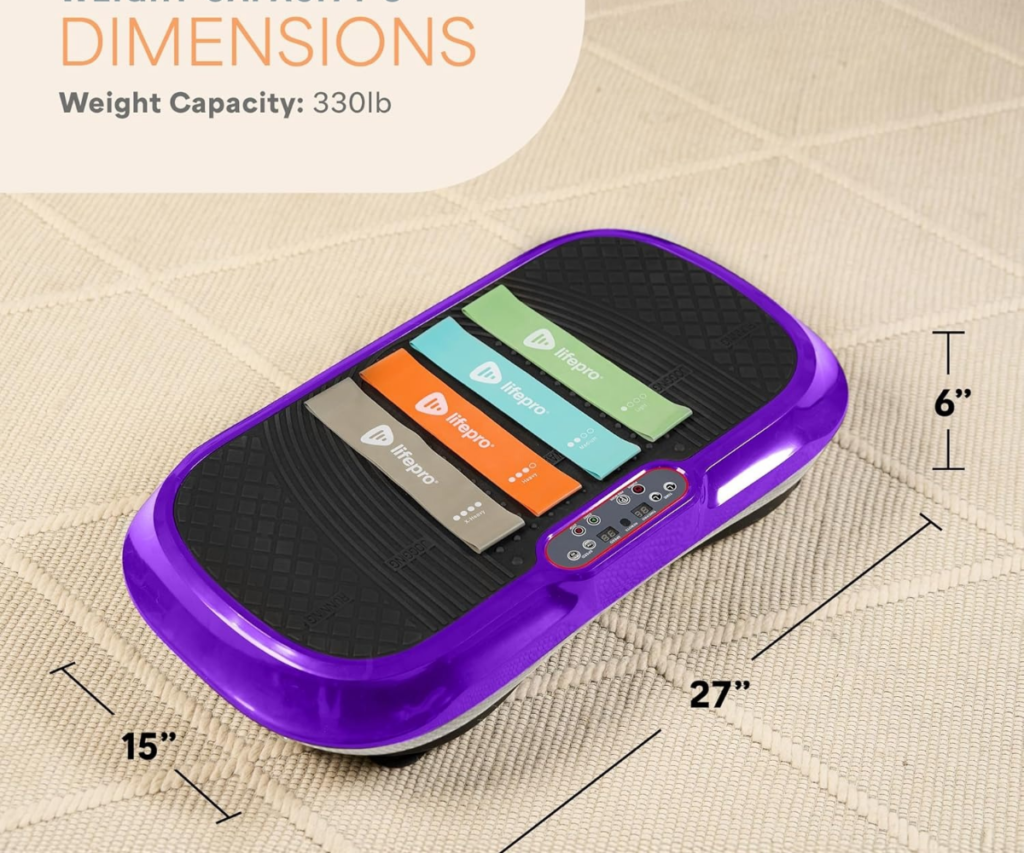
To provide readers with a practical example of the type of equipment discussed in this article, one commercially available option includes:
Lifepro Waver Vibration Plate Exercise Machine: https://www.amazon.com/dp/B08VJN4Z5T
TESLA🗝️The EMS 15 Tesla is an innovative device that uses Electrical Muscle Stimulation (EMS) technology to effectively stimulate muscles and aid in fat removal. Designed to enhance body shaping and slimming, it helps tone muscles and improve the appearance of the buttocks, abdomen, and thighs in a short period of time. With its sleek, modern design, the device is ideal for both home and salon use. It offers safe, effective sessions for improving physical fitness and body contour.
https://s.click.aliexpress.com/e/_c4e9fAf1
🌿Synergistic Ingredients for Better Energy and Metabolism
This formulation features naturally derived ingredients chosen for their ability to work together to boost metabolic efficiency, enhance energy use, and reduce fatigue—key factors that help support energy balance and weight management.
https://nplink.net/ooihri9y
Note: This product is available exclusively through the manufacturer’s official website and is not sold on Amazon.
Transparency: Some links within this content may be affiliate links. This means we may earn a small commission at no additional cost to you if a purchase is made through them.
Author Bio
Hr Natura is a health and nutrition researcher with over 12 years of experience analyzing dietary supplements and sharing practical, evidence-based strategies for weight management. He founded Bionatry to provide clear, science-backed resources for nutrition and weight management enthusiasts. For additional perspectives on training methodologies, readers may explore related Bionatry resources covering complementary approaches to functional strength development at bionatry.com.