
bionatry: June, 17, 2026
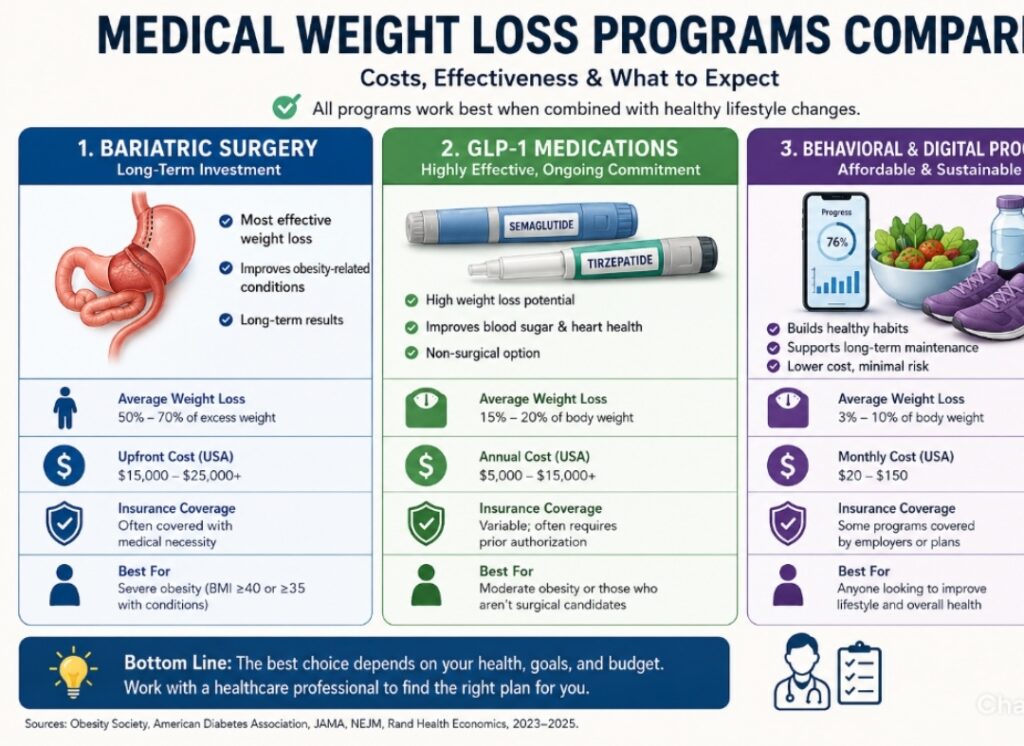
Medical Weight Loss Programs Explained: Are They Worth the Cost?
With obesity affecting more than 40% of American adults and projections suggesting that nearly half of U.S. adults may be living with obesity by 2030, medical weight loss programs have become increasingly popular. From GLP-1 medications capable of producing substantial weight reduction to bariatric surgery and digital lifestyle coaching, consumers face a growing number of options—each with different costs, benefits, and long-term commitments.
Choosing the right approach can be challenging. While some treatments offer impressive results, they may also involve significant financial investments or require lifelong management. This evidence-based guide examines the effectiveness, costs, and limitations of the most common medical weight loss programs to help you make an informed decision.
Do Medical Weight Loss Programs Deliver Good Value?
Evaluating a weight loss program requires considering three factors:
- Upfront cost
- Expected weight loss results
- Long-term impact on health and healthcare expenses
1. Bariatric Surgery: A Long-Term Investment
For individuals with severe obesity (BMI ≥40, or ≥35 with obesity-related conditions), bariatric surgery remains one of the most effective treatments available.
Procedures such as Roux-en-Y gastric bypass (RYGB) consistently produce significant and durable weight loss while improving type 2 diabetes, hypertension, and cardiovascular risk factors. Health economic analyses suggest that bariatric surgery provides excellent long-term value because its health benefits often outweigh its initial cost.
However, surgery involves substantial upfront expenses, recovery time, and lifelong nutritional monitoring. It is also not suitable or accessible for everyone.
Who may benefit most?
- Adults with severe obesity
- Individuals with obesity-related medical conditions
- Patients seeking long-term weight reduction with physician supervision
2. GLP-1 Medications: Highly Effective but Expensive
Modern medications such as semaglutide and tirzepatide have transformed obesity treatment. Clinical trials have shown average weight reductions exceeding 15–20% in many patients when combined with lifestyle changes.
Programs combining GLP-1 medications with behavioral coaching have reported even greater results among highly engaged participants.
Despite their effectiveness, these medications can cost thousands of dollars annually. Another important consideration is that discontinuing treatment often leads to partial weight regain, meaning many individuals may require long-term therapy to maintain results.
Advantages
- Significant weight loss potential
- Improvement in metabolic health
- Non-surgical option
Limitations
- High ongoing costs
- Gastrointestinal side effects
- Weight regain after discontinuation is common
3. Behavioral and Digital Programs: Strong Value for Many People
Lifestyle interventions remain the foundation of obesity management.
Commercial and digital programs that provide nutritional guidance, habit formation, accountability, and coaching have demonstrated better outcomes than self-directed efforts alone. Some studies have also shown that structured digital programs may reduce overall healthcare utilization and related costs.
Because these programs are generally affordable and carry minimal risk, they often represent an excellent starting point for individuals seeking sustainable weight loss.
Benefits
- Lower cost
- Improved eating and exercise habits
- Long-term sustainability
- Accessible from home
Why Weight Loss Programs Sometimes Fail—and How to Improve Success
Risk #1: Weight Regain After Stopping Medication
Weight regain is common after discontinuing GLP-1 medications, highlighting that obesity is a chronic condition rather than a short-term problem.
Solution: Combine Medication with Lifestyle Support
Research suggests that pairing medication with behavioral counseling, exercise, and nutritional education improves long-term outcomes and may help maintain results over time.
Risk #2: Unexpected Costs
Some physician-supervised weight loss clinics may involve additional expenses for supplements, laboratory testing, consultations, or maintenance visits that are not always covered by insurance.
Solution: Compare Programs Carefully
Before enrolling, consider:
- Total annual cost
- Insurance coverage
- Scientific evidence supporting the program
- Availability of nutritional and behavioral support
- Long-term sustainability
Starting with lower-cost digital or behavioral programs may be a reasonable first step before considering medications or surgery.
Risk #3: Loss of Motivation
Successful weight management requires consistency. Many participants struggle to maintain engagement, reducing their chances of achieving significant weight loss.
Solution: Build a Support System
Programs offering:
- Individual coaching
- Accountability tools
- Community support
- Personalized guidance
may improve adherence and increase the likelihood of long-term success.
Are Medical Weight Loss Programs Worth It?
The answer depends on your health status, goals, and budget.
Medical weight loss programs may be worth the investment when:
✔ They are part of a comprehensive strategy
Effective obesity treatment usually combines nutrition, physical activity, behavioral changes, and, when appropriate, medications or surgery.
✔ The right treatment is matched to the right patient
Bariatric surgery may provide the greatest benefit for severe obesity, while medications can be valuable for individuals who are not surgical candidates or prefer non-surgical options.
✔ Long-Term Health Benefits Outweigh the Cost
Even relatively affordable behavioral programs may reduce future healthcare expenses by helping prevent diabetes, heart disease, and other obesity-related complications.
Conversely, expensive programs lacking scientific support or promising unrealistic results may provide poor value.
Ultimately, obesity management should be viewed as a long-term investment in health rather than a quick fix. Consulting a qualified healthcare professional can help determine which approach best fits your needs.
Based on the analysis above, we have added options that strongly support weight loss. These products have been independently selected to primarily promote sustainable weight management:
✅Natural Supplement for Weight Loss and Wellness
This natural supplement, derived from green barley, is known for its slimming and detoxifying properties. Its formula is based on a legendary ingredient—garcinia cambogia. The interaction between these two active substances produces a very powerful fat burner, which also enhances the feeling of fullness and helps shed several kilograms in a short period of time. It also improves the appearance of skin, hair, and nails.
https://nplink.net/eomgdlw8
✅Meal Replacement Option (When Whole Food Isn’t Practical)
Product: Almased Meal Replacement Shakes
What it offers: 24g protein, 22 vitamins/minerals, and 80 bioactive nutrients per serving.
Who it may suit: People with limited time for meal preparation who struggle to meet protein targets through food alone.
Considerations: Not a permanent substitute for whole foods. Taste preferences vary. Best used occasionally, not as every meal.
View on Amazon: https://amzn.to/41LVDOd
✅ How to burn fat while you sleep?
Michael lost 31 kg faster than he expected, without the hassle of exercise or hunger. A natural blend of 8 ingredients that improves your sleep depth and activates fat burning at night. Trusted by over 120,000 people. Full money-back guarantee, free shipping, and two exclusive gifts. Turn your sleep into a weight loss opportunity now.
https://e32e6i1lrzr1oi5fm2l9q3md6l.hop.clickbank.net
Products are chosen independently by us. Purchases made through our links may earn us a commission at no additional cost to you.
Frequently Asked Questions
What is the difference between medical and commercial weight loss programs?
Medical programs are supervised by healthcare professionals and may include prescription medications or bariatric surgery. Commercial programs primarily focus on nutrition, exercise, and behavioral coaching.
Are Ozempic and Mounjaro worth their high cost?
These medications can produce substantial weight loss, but their value depends on affordability, insurance coverage, and long-term commitment. Combining them with lifestyle interventions generally produces the best outcomes.
How do I know which weight loss program is right for me?
Speak with a healthcare provider to evaluate your BMI, medical history, metabolic health, and personal goals. Factors such as budget, lifestyle, and willingness to maintain long-term treatment should also be considered.
Is weight regain common after stopping weight loss medications?
Yes. Studies suggest that some regained weight is common after discontinuation, which is why sustainable lifestyle changes remain essential for maintaining results.
Does insurance cover medical weight loss programs?
Coverage varies widely among insurance providers. Some plans cover medications, behavioral counseling, or bariatric surgery, while others provide limited benefits. Reviewing your specific plan is recommended.
Author Bio
R Hallou is a health and nutrition writer at Bionatry, where he focuses on evidence-based strategies for sustainable weight management. His work emphasizes scientific research, practical lifestyle approaches, and critical analysis of nutritional supplements and emerging obesity treatments.
Website: https://www.bionatry.com
Medical Disclaimer: This article is intended for educational purposes only and does not replace professional medical advice, diagnosis, or treatment. Always consult a qualified healthcare professional before starting any weight loss program or medication.