
bionatry: June, 25, 2026
Weight Loss Diet Plan for Men: An Evidence-Based Guide to Sustainable Fat Loss and Better Health
Weight Loss Diet Plan for Men: A Science-Backed Approach to Sustainable Results
Introduction
Weight management remains one of the biggest health challenges facing men today. According to the U.S. Centers for Disease Control and Prevention (CDC), obesity affects a significant proportion of adult men and is associated with increased risks of heart disease, type 2 diabetes, hypertension, sleep apnea, and certain cancers.
Research suggests that losing as little as 5–10% of body weight can improve blood sugar control, blood pressure, and cardiovascular risk factors. A landmark study published in the New England Journal of Medicine found that sustained weight reduction can significantly improve long-term metabolic health.
The challenge is not simply losing weight—it’s keeping it off. Many restrictive diets fail because they ignore the physiological needs of men, particularly the importance of preserving muscle mass during fat loss.
This evidence-based guide explains how men can build a sustainable nutrition strategy that supports healthy weight loss while maintaining strength, energy, and overall wellness.
Why Weight Loss Strategies Should Be Different for Men
Higher Muscle Mass and Metabolism
Men generally have more lean muscle tissue than women, which contributes to a higher resting metabolic rate (RMR). Muscle requires energy even at rest, meaning men typically burn more calories throughout the day.
However, this advantage does not eliminate the need for calorie control. Weight loss still depends on maintaining a consistent energy deficit over time.
The Role of Testosterone
Testosterone helps regulate muscle mass, fat distribution, and physical performance. Age-related declines in testosterone may contribute to increased abdominal fat and reduced muscle mass.
This is one reason why resistance training and adequate protein intake are critical components of any weight loss plan for men.
Health Risks Associated with Excess Body Weight
Excess body fat, especially visceral fat around the abdomen, has been linked to:
- Cardiovascular disease
- Type 2 diabetes
- High blood pressure
- Metabolic syndrome
- Fatty liver disease
- Sleep apnea
- Joint problems
- Certain cancers
According to the National Institutes of Health (NIH), reducing excess body weight can significantly lower these health risks and improve overall quality of life.
The Core Principles of a Successful Weight Loss Diet Plan
1. Create a Sustainable Calorie Deficit
Weight loss occurs when calorie expenditure exceeds calorie intake.
A moderate calorie deficit of approximately 500 calories per day often supports gradual and sustainable fat loss while minimizing muscle loss.
Avoid extreme diets that severely restrict calories, as they may increase hunger, reduce metabolic rate, and make long-term adherence more difficult.
2. Prioritize Protein
Protein is arguably the most important nutrient during a fat-loss phase.
Benefits of Higher Protein Intake
✓ Supports muscle preservation
✓ Increases satiety
✓ Reduces hunger
✓ Helps maintain metabolic rate
✓ Supports exercise recovery
Current research suggests active individuals pursuing fat loss may benefit from approximately 1.6–2.2 grams of protein per kilogram of body weight.
High-Protein Foods
- Chicken breast
- Turkey
- Fish
- Eggs
- Greek yogurt
- Cottage cheese
- Tofu
- Tempeh
- Lentils
- Beans
3. Focus on High-Quality Carbohydrates
Rather than eliminating carbohydrates, prioritize nutrient-dense sources:
- Oats
- Brown rice
- Quinoa
- Sweet potatoes
- Beans
- Lentils
- Fruits
- Vegetables
These foods provide fiber, vitamins, minerals, and sustained energy.
4. Include Healthy Fats
Healthy fats support hormone production and overall health.
Examples include:
- Olive oil
- Avocados
- Walnuts
- Almonds
- Chia seeds
- Flaxseeds
- Fatty fish
Recommended Macronutrient Distribution
Protein: 30–35%
Carbohydrates: 40–45%
Healthy Fats: 25–30%
Suggested Infographic
Create a pie chart showing:
- Protein: 35%
- Carbohydrates: 40%
- Healthy Fats: 25%
Weekly Weight Loss Meal Plan for Men
Sunday
Breakfast
Option 1: Scrambled eggs with spinach and whole-grain toast
Option 2: Greek yogurt with berries and chia seeds
Option 3 (Plant-Based): Tofu scramble with vegetables
Lunch
Option 1: Grilled chicken breast with quinoa
Option 2: Tuna salad with mixed vegetables
Option 3: Chickpea quinoa bowl
Dinner
Option 1: Baked salmon with sweet potato
Option 2: Lean turkey with roasted vegetables
Option 3: Lentil and vegetable stew
Snack
- Almonds
- Greek yogurt
- Apple slices with peanut butter
Repeat Similar Structure Throughout the Week
Rotate:
Protein Sources
- Chicken
- Turkey
- Salmon
- Tuna
- Lean beef
- Eggs
- Greek yogurt
- Tofu
- Lentils
Carbohydrate Sources
- Brown rice
- Oats
- Quinoa
- Sweet potatoes
- Whole grains
Vegetables
- Broccoli
- Spinach
- Zucchini
- Bell peppers
- Asparagus
- Mixed greens
Weekly Grocery Shopping List
Proteins
✓ Chicken breast
✓ Turkey
✓ Salmon
✓ Tuna
✓ Eggs
✓ Greek yogurt
✓ Tofu
✓ Lentils
Carbohydrates
✓ Oats
✓ Brown rice
✓ Quinoa
✓ Sweet potatoes
✓ Whole-grain bread
Healthy Fats
✓ Olive oil
✓ Almonds
✓ Walnuts
✓ Avocados
✓ Chia seeds
Vegetables
✓ Spinach
✓ Broccoli
✓ Bell peppers
✓ Cucumbers
✓ Mixed greens
Fruits
✓ Apples
✓ Berries
✓ Bananas
Meal Prep Tips
Sunday Meal Preparation
- Grill protein sources for 3–4 days.
- Cook large batches of rice or quinoa.
- Wash and portion vegetables.
- Prepare healthy snacks in containers.
Storage Guidelines
| Food | Refrigerator |
|---|---|
| Cooked chicken | 3–4 days |
| Cooked rice | 3–4 days |
| Cooked vegetables | 3–5 days |
| Hard-boiled eggs | Up to 7 days |
Helpful Kitchen Tools
- Digital food scale
- Meal-prep containers
- Blender
- Air fryer
- Measuring cups
Dietary Supplements That May Support Your Goals
| Supplement | Potential Benefit | Typical Daily Amount | Notes |
|---|---|---|---|
| Whey Protein | Muscle support and satiety | 20–40 g | Plant-based alternatives available |
| Omega-3 | Heart health support | 1–3 g | Fish oil or algae-based |
| Vitamin D | Bone and immune health | 600–2000 IU | Depends on individual needs |
| Magnesium | Muscle relaxation and sleep support | 300–400 mg | Often taken in the evening |
Important: Consult a qualified healthcare professional before taking any supplement, especially if you have medical conditions or take prescription medications.
Customized Recommendations
For Active Men
- Daily calories: 2,500–2,800
- Higher protein intake
- Additional carbohydrates around workouts
For Sedentary Men
- Daily calories: 1,800–2,000
- Emphasize fiber-rich foods
- Increase daily walking
For Men Over 50
- Prioritize calcium-rich foods
- Ensure adequate vitamin D intake
- Limit excess sodium
- Include resistance training
Common Challenges and How to Overcome Them
Cravings for Sweets
- Increase protein intake
- Eat more fiber-rich foods
- Keep healthy snacks available
Eating Out
- Choose grilled proteins
- Request dressings on the side
- Prioritize vegetables
Weight Loss Plateaus
- Review calorie intake
- Increase physical activity
- Focus on sleep quality
- Be patient and consistent
Getting Back on Track
One high-calorie meal does not ruin progress.
Resume normal healthy eating at the next meal rather than trying extreme restrictions.
Frequently Asked Questions
How Do I Calculate My Daily Calorie Needs?
Use a reputable calorie calculator based on age, weight, height, activity level, and goals.
Can I Drink Coffee While Dieting?
Yes. Unsweetened coffee can fit into most weight loss plans.
How Do I Deal With Hunger Between Meals?
Increase protein, fiber, and water intake. These factors can help improve satiety.
What Should I Do During a Weight Loss Plateau?
Review your calorie intake, increase activity levels, and ensure adequate sleep and recovery.
Is Cheat Meal Planning Necessary?
Not necessarily. Many people succeed by following a flexible eating approach that allows occasional treats in moderation.
Suggested Images and Visual Content
Featured Image
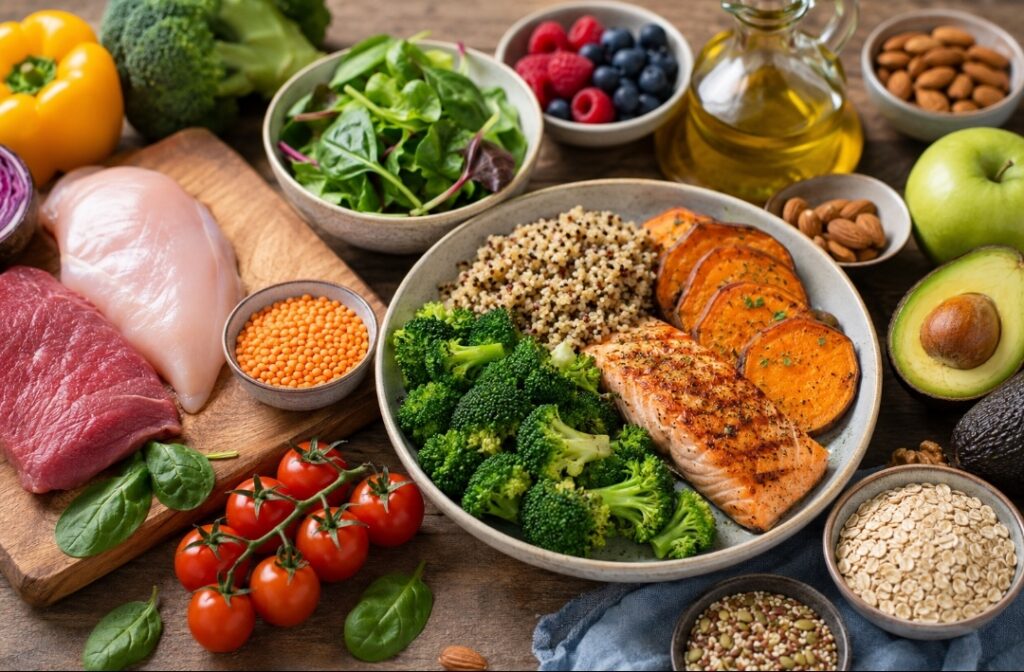
Healthy high-protein foods arranged on a table.
Infographic
Healthy plate model:
- ½ vegetables
- ¼ lean protein
- ¼ complex carbohydrates
Exercise Illustration
Basic resistance exercises:
- Squats
- Push-ups
- Rows
- Deadlifts
Interactive Table
Daily calorie recommendations by:
- Age
- Weight
- Activity level
References
- Harvard T.H. Chan School of Public Health – Healthy Eating Plate
- Mayo Clinic – Weight Loss Basics
- National Institutes of Health (NIH) – Obesity and Weight Management
- Centers for Disease Control and Prevention (CDC) – Healthy Weight
- Academy of Nutrition and Dietetics – Adult Weight Management Guidelines
- New England Journal of Medicine – Long-Term Weight Loss Research
- PubMed – High-Protein Diets and Body Composition Studies
Products Some People Use for Weight Management.
Based on the information discussed above, some individuals include dietary supplements as part of a broader weight-management approach. These products are meant to complement balanced nutrition, regular physical activity, and other healthy lifestyle habits that support long-term well-being.
✅ Keto-Friendly Supplement for Weight Management Support
Start your weight-management journey with NuviaLab Keto, a dietary supplement designed to complement a ketogenic lifestyle. Its carefully selected ingredients are intended to support fat metabolism, help manage cravings, and maintain natural energy levels throughout the day. It may also help ease the transition into ketosis, making the keto lifestyle more comfortable to follow. When combined with healthy eating habits and regular activity, it can be a convenient addition to your daily routine.
Products are chosen independently by us. Purchases made through our links may earn us a commission at no additional cost to you.
Conclusion
A successful weight loss diet plan for men should focus on sustainable habits rather than short-term restrictions. By combining a moderate calorie deficit, adequate protein intake, nutrient-dense foods, regular exercise, quality sleep, and consistent meal planning, men can achieve meaningful fat loss while supporting long-term health.
The goal is not perfection—it is consistency. Small, sustainable improvements often lead to the most lasting results.
Ready to Start Your Weight Loss Journey?
Don’t wait for the perfect moment. Start implementing these practical strategies today.
📩 Subscribe to our newsletter for weekly nutrition tips and meal plans.
💪 Share this article with someone who is working toward a healthier lifestyle.
📘 Download our free weight loss guide for additional evidence-based nutrition strategies.
Author Bio
R Hallou is a health and nutrition writer at Bionatry who specializes in evidence-based weight management strategies, healthy lifestyle practices, and nutrition research. His goal is to help readers make informed decisions through practical, science-backed health information.
Website: https://www.bionatry.com