
Publication date: February 17, 2026
By Hr Natura
Why Weight Loss Plateaus Happen (And the Overlooked Metabolic Variable)
Individual standing on a vibration plate exercise machine during a brief morning home workout session
A weight loss plateau remains one of the most commonly reported challenges in structured fat reduction programs. Even when caloric intake and formal exercise remain consistent, measurable fat loss may slow or temporarily stabilize.
At bionatry, I examine how metabolic systems respond dynamically to energy restriction. Body weight regulation reflects coordinated interactions between energy expenditure, hormonal signaling, neural regulation, and behavioral adaptation.
In this article, I focus on one often overlooked variable: brief low-intensity morning movement, particularly when incorporated into an at-home fat loss routine that may include vibration platforms.
The discussion that follows is educational and research-based. It is not presented as medical treatment or a standalone intervention for obesity.
1. Context and Observational Background
In clinical and research settings, I have repeatedly observed that individuals who engage in structured low-intensity movement shortly after waking often demonstrate more stable daily activity levels during caloric restriction.
This morning variable typically includes:
- 5–10 minutes of gentle muscle activation
- Light oscillatory or postural stimulation
- Standing-based movement that reduces early-day sedentary time
These observations are not derived from randomized controlled trials. Dietary adherence, sleep patterns, and stress exposure varied across individuals. Therefore, conclusions remain associative rather than causal.
However, physiological plausibility exists.
Scheer et al. (Proceedings of the National Academy of Sciences, 2009) demonstrated that circadian misalignment significantly alters glucose metabolism and hormonal regulation. Early-day movement may support circadian alignment, which in turn may influence energy expenditure patterns.
The magnitude of this influence varies across individuals.
2. Mechanisms and Rationale Behind the Morning Variable
Circadian Biology and Cortisol Rhythm
Cortisol typically peaks in the early morning. When synchronized with movement and light exposure, this rhythm may assist substrate mobilization.
Circadian alignment has been associated with improved metabolic regulation (Scheer et al., 2009). Early movement may reinforce these biological timing signals, though individual response differs.
Leptin, Ghrelin, and Appetite Feedback
Energy restriction reduces leptin and increases ghrelin, contributing to appetite signaling.
Rosenbaum & Leibel (American Journal of Clinical Nutrition, 2010) described adaptive thermogenesis, a compensatory decline in energy expenditure that exceeds what would be predicted by weight loss alone. This process involves hormonal and neural mechanisms that reduce spontaneous movement and increase hunger.
Morning activation may indirectly influence appetite feedback by supporting early-day energy expenditure and behavioral engagement. Evidence suggests association rather than direct reversal of metabolic adaptation.
Metabolic Adaptation and NEAT Suppression
Müller et al. (Obesity Reviews, 2015) expanded the concept of metabolic adaptation, documenting reductions in resting energy expenditure and non-exercise activity thermogenesis (NEAT) during prolonged caloric restriction.
NEAT suppression contributes meaningfully to slowed weight loss kinetics. Structured low-intensity morning activation may help mitigate behavioral reductions in movement observed during dieting phases.
Energy Expenditure and Vibration Plate Workout Benefits
Total daily energy expenditure includes resting metabolic rate, thermic effect of food, structured exercise, and NEAT.
Research examining vibration plate workout benefits suggests modest increases in acute muscle activation and energy expenditure compared to passive standing. These effects are supportive in nature and do not independently drive substantial fat loss.
Within an at-home fat loss routine, vibration-assisted activation may serve as a time-efficient method of stimulating postural musculature without inducing significant fatigue.
3. Practical Implementation Framework
The following framework represents a structured behavioral methodology rather than medical advice.
Timing:
Within 30–60 minutes of waking.
Duration:
5–10 minutes.
Intensity:
Low-intensity oscillatory stimulation or gentle bodyweight movement. The objective is neuromuscular activation rather than cardiovascular strain.
Frequency:
5–7 days per week during periods of caloric restriction.
Constraints and Boundaries:
- Not a substitute for resistance training.
- Not an obesity treatment.
- Should not replace medical supervision in metabolic disorders.
When incorporated thoughtfully, vibration platforms may assist individuals seeking consistent morning activation as part of an at-home fat loss routine.
4. Applicability, Boundaries, and Ethical Considerations
Population Most Likely to Observe Supportive Effects
- Individuals experiencing reduced spontaneous movement during dieting
- Sedentary workers
- Those attempting to preserve NEAT during caloric restriction
Contraindications
Vibration platforms may not be appropriate for individuals with:
- Acute musculoskeletal injury
- Severe balance impairment
- Certain cardiovascular conditions
- Pregnancy without physician approval
Medical evaluation is appropriate when chronic health conditions are present.
Educational Disclaimer
Body weight regulation is multifactorial. Genetics, environment, sleep patterns, stress exposure, dietary behavior, and physiology all influence outcomes. No single intervention determines long-term results.
This article is provided for educational purposes and does not constitute medical advice.
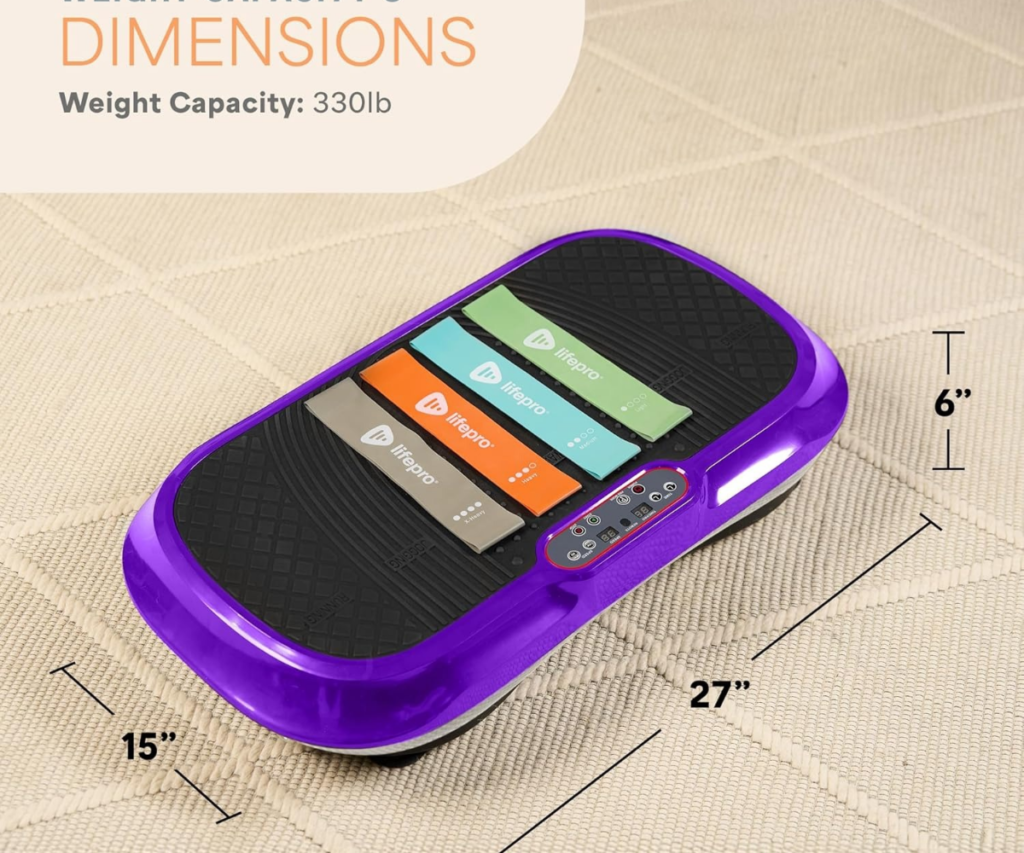
For readers seeking a practical example of a home vibration platform, one commercially available model is:
Lifepro Waver Vibration Plate Exercise Machine for Lymphatic Drainage, Muscle Activation, Full-Body Workout Vibrating Platform with Loop Bands
https://amzn.to/4anYGSc
(As an Amazon Associate, we earn from qualifying purchases.)
Frequently Asked Questions
Does vibration training independently cause fat loss?
Current evidence suggests vibration platforms may modestly increase acute energy expenditure and muscle activation. However, sustained fat loss depends primarily on overall energy balance and behavioral consistency.
Can morning movement prevent adaptive thermogenesis?
There is no evidence that it prevents adaptive thermogenesis. It may help attenuate reductions in spontaneous movement observed during caloric restriction (Rosenbaum & Leibel, 2010).
How does circadian alignment influence metabolic health?
Circadian misalignment has been associated with impaired glucose tolerance and altered hormonal regulation (Scheer et al., 2009). Early-day activity may reinforce circadian timing signals.
Is this approach appropriate during a weight loss plateau?
It may be integrated within a comprehensive strategy that includes dietary review, resistance training, and sleep optimization. It is not a standalone solution.
Author Bio
Hr Natura is a health and nutrition researcher with over 12 years of experience analyzing dietary supplements and sharing practical, evidence-based strategies for weight management. He founded Bionatry to provide clear, science-backed resources for nutrition and weight management enthusiasts. Learn more at https://bionatry.com.